The University of Southern Illinois houses the National Corn to Ethanol Research Center and has facilities as well as personnel to carry on all the pertinent tests.
http://www.siue.edu/ethanolresearch/pilot-plant.shtml
This is the site were you can contact the Director Dr. Brian Wrenn
I have sent a sample of the mesquite flour to Dr Wrenn and are waiting for some time available to run the sample.
We are grateful to Dr. Wrenn for even considering us.
Friday, March 19, 2010


Tuesday, March 16, 2010
This is March 2010
Curious enough the mesquite, in it's majority are still sleep [no new leaves visible]. An old indian adage said that only when the mesquite awoke(?) did Spring really start.
Many other trees are all sporting new leaves and a few mesquites but not the majority.
Guess it is backing what the ground hog said, long winter!
Many other trees are all sporting new leaves and a few mesquites but not the majority.
Guess it is backing what the ground hog said, long winter!
Sunday, May 10, 2009
Beer from mesquite bean flour
My first try, using materials from Home Brew Fetish in Bandera St., used only the mesquite as the ingredient. The yeast did her thing and so did the mesquite flour, the end product is a beer worth of the Vikings, strong, woody, past new, taste and smell. 3 Home Brew hombres, did not care for it either. Need to use a beer formula and flavor it with mesquite flour.
As soon as I get it done will tell you about it.
II Trial
Used American Light from Iron Master ID IP142AG product of UK in came in a 64 oz can. I added my mesquite flour to it and my final Brix was 15, after 8 days at 70-74 degrees it came down to 7.5 degrees Brix. I used a spoon full of mesquite flour per bottle. After a week the product is drinkable although strong and with a significant presence, very light amount of head from secondary fermentation.
I did get asked for seconds this time.
As soon as I get it done will tell you about it.
II Trial
Used American Light from Iron Master ID IP142AG product of UK in came in a 64 oz can. I added my mesquite flour to it and my final Brix was 15, after 8 days at 70-74 degrees it came down to 7.5 degrees Brix. I used a spoon full of mesquite flour per bottle. After a week the product is drinkable although strong and with a significant presence, very light amount of head from secondary fermentation.
I did get asked for seconds this time.
Wednesday, December 3, 2008
The 2009 mesquite season
This is May of 2009, the past two months showed a strong flowering stance of the mesquite trees in the San Antonio area. This is indicative of a strong production of beans. Have yet to find the investor for a project making alcohol from these beans but will keep on looking.
Trisoy de Nayarit
A cookie making company in Tepic, Nayarit, Mexico has taken seriously the mesquite connection and have an approved cookie from mesquite meal (George Bain's - San Antonio, Texas) and oat meal, the cookie is to be recommended for diabetic suffering persons. Further study will be done to measure the meaningfullness of the cookie to the diabetic person.
Luis Manuel and Felicitas Hernandez owners of Tri-Soy with email "FELICITAS CORRALES HERNANDEZ" for anyfurther information.
Luis Manuel and Felicitas Hernandez owners of Tri-Soy with email "FELICITAS CORRALES HERNANDEZ"
Monday, August 11, 2008
XII. Showing the harvest 2008 at San Antonio, Texas


 The cream colored material under the tree are
 fallen beans.
Friday, June 27, 2008
Thursday, June 19, 2008
X. An introduction to the insects ALSO interested on the bean as food.
Seed-Feeding Mesquite Beetles
( A l g a r o b i u s p r o s o p i s a n d N e l t u m i u s a r i z o n e n s i s )
A natural enemy of MESQUITE (Prosopis species) in South Africa
11 D O S S I E R S O N B I O L O G I C A L C O N T R O L A G E N T S A V A I L A B L E T O A I D A L I E N P L A N T C O N T R O L
Description
These are small beetles (up to 5Êmm in length). Algarobius is a uniform
fawn colour with elytra (hardened fore wings) that are darker than
the rest of the body. Neltumius has a mottled black and white
patchwork pattern over its entire body. The beetles are distinctive
because the abdomen extends beyond the elytra. Their presence is
easily noticeable by the occurrence of neat round holes in the
mature seed pods of prosopis, both on the trees and on the ground.
Life Cycle
Grubs of both species develop in mature seeds within mesquite seed
pods. Eggs of Neltumius are glued singly on the surface of the pods
and shells may remain in place for several months after the eggs have
hatched. Algarobius eggs are laid in cracks and blemishes on the seed
pods. Each grub enters and entirely destroys a single mesquite seed
during its development. Pupation occurs within the hollowed out seed
and adults emerge through distinctive holes on the surface of the pods.
Feeding Damage
Only the seeds of mesquite within the seed pods are damaged by the
beetles. The seed pods and vegetative parts of the plants are not affected.
Impact on Mesquite
Although up to 95% of seeds produced by mesquite can be destroyed
by these seed-beetles, they are probably having very little impact
on the dynamics of mesquite invasions because seed pods are eaten
by livestock and game before the beetles can utilise and destroy
many of the seeds. As a result seed destruction by the beetles seldom
reaches very high levels. Most seeds are ingested and pass through
the gut of animals undamaged. Once dispersed in the veld, seeds
are no longer suitable as a food source for the beetles.
A u t h o r : J . H . H O F F M A N N , Z o o l o g y D e p a r t m e n t , U n i v e r s i t y o f C a p e Town, Rondebosch 7701
Patron in Chief:
Nelson Mandela
THE WORKING FOR WATER PROGRAMME
ARC LNG
DESIGNED BY 021 8524623


( A l g a r o b i u s p r o s o p i s a n d N e l t u m i u s a r i z o n e n s i s )
A natural enemy of MESQUITE (Prosopis species) in South Africa
11 D O S S I E R S O N B I O L O G I C A L C O N T R O L A G E N T S A V A I L A B L E T O A I D A L I E N P L A N T C O N T R O L
Description
These are small beetles (up to 5Êmm in length). Algarobius is a uniform
fawn colour with elytra (hardened fore wings) that are darker than
the rest of the body. Neltumius has a mottled black and white
patchwork pattern over its entire body. The beetles are distinctive
because the abdomen extends beyond the elytra. Their presence is
easily noticeable by the occurrence of neat round holes in the
mature seed pods of prosopis, both on the trees and on the ground.
Life Cycle
Grubs of both species develop in mature seeds within mesquite seed
pods. Eggs of Neltumius are glued singly on the surface of the pods
and shells may remain in place for several months after the eggs have
hatched. Algarobius eggs are laid in cracks and blemishes on the seed
pods. Each grub enters and entirely destroys a single mesquite seed
during its development. Pupation occurs within the hollowed out seed
and adults emerge through distinctive holes on the surface of the pods.
Feeding Damage
Only the seeds of mesquite within the seed pods are damaged by the
beetles. The seed pods and vegetative parts of the plants are not affected.
Impact on Mesquite
Although up to 95% of seeds produced by mesquite can be destroyed
by these seed-beetles, they are probably having very little impact
on the dynamics of mesquite invasions because seed pods are eaten
by livestock and game before the beetles can utilise and destroy
many of the seeds. As a result seed destruction by the beetles seldom
reaches very high levels. Most seeds are ingested and pass through
the gut of animals undamaged. Once dispersed in the veld, seeds
are no longer suitable as a food source for the beetles.
A u t h o r : J . H . H O F F M A N N , Z o o l o g y D e p a r t m e n t , U n i v e r s i t y o f C a p e Town, Rondebosch 7701
Patron in Chief:
Nelson Mandela
THE WORKING FOR WATER PROGRAMME
ARC LNG
DESIGNED BY 021 8524623
Wednesday, June 18, 2008
IX. Natural Foods - value of mesquite bean
THE DESERT'S PERFECT FOODS
ALAN ALDA (NARRATION) We're on the Tohono O'Odham tribal reservation in
FRANCIS MANUEL, are familiar with the old foods. This is Francis's daughter, Dolores.
DOLORES This is wild spinach. We've been eating it since we were little.
ALAN ALDA (NARRATION) Tortillas were once made with desert ingredients. Now the elders are saying it's time to revive the old ways.
ALAN ALDA Is this an attempt to go back totally to the food that used to be eaten? Or to just introduce some of it into the diet?
DANNY LOPEZ It is an attempt to kind of create an awareness to people that they have to change. Something has to be done.
ALAN ALDA (NARRATION) This is what something has to be done about. Caroline Jackson, who lives on the nearby Pima reservation, has diabetes. So do half of all adult Pima and Tohono O'Odham - 15 times the national average. The two tribes also have exceptionally high rates of obesity, even though their diets are average. Extensive study has suggested that in one special way these people are not average. They have what's called the thrifty gene, which allowed them to put on weight very efficiently during the desert's times of plenty, so they could get through the bad times. The problem is it's good times all the time now. Nowadays, like all Americans they get their food from a supermarket shelf. They spend a lot of time in front of the TV. And they drive practically everywhere. Only 50 years ago the two tribes were tough and active farmers, hunters and gatherers, with no obesity and no diabetes. Things began to break down when the region's water was pumped away to growing cities. And even though they still had the skills to gather wild food, or divert flash floods to their fields, it became impossible to resist adopting a typical American lifestyle.
ALAN ALDA So you make a brush out of this and you rub the fruit with it? And that gets the needles off?
DANNY LOPEZ Yeah, see the fruit's always sitting up here, you know, like that, and you brush 'em off, brush 'em off pretty good.
ALAN ALDA (NARRATION) A brush made from the creosote bush gets off the almost invisible coating of tiny, sharp spines. Prickly pear fruit and pads were important foods - although you had to avoid the poisonous seeds, Danny said.
DANNY LOPEZ That's a mesquite tree right here. See here's some that are dried, beans. They'd all be hanging, hanging on the trees, and the kids all walk by and pull them off and eat them
ALAN ALDA (NARRATION) Ground up mesquite pods gave a sweet and nutritious flour. They were good to just chew on, as well.
ALAN ALDA Taste it, yeah, can I? I'll just take off a little bit. I don't want to spoil it for somebody...
DOLORES Don't swallow the seeds too.
ALAN ALDA Don't swallow the seeds. What'll happen to me if I swallow…
DOLORES Same thing that happens when you eat the prickly pear with the seeds.
ALAN ALDA I have to go to the hospital.
DOLORES Yeah, give you an enema.
ALAN ALDA Boy, I'll tell ya, this program is really dangerous. It's all seeds. What do you mean, don't swallow the seeds? There's nothing but seeds here.
FRANCIS MANUEL Chew it.
ALAN ALDA I got to get rid of the seed. Wait a minute.
DOLORES Yeah.
FRANCIS MANUEL Yeah.
ALAN ALDA It's sweet. Sweet and chewy and the taste, like something that I know. It tastes like, you know what it tastes like? Like a Box of Cracker Jacks. You know, it's sweet and crunchy. It's a snack bush. Nice. Francis, how did you learn about all this?
FRANCIS MANUEL My grandmother tell me.
ALAN ALDA Your grandmother?
FRANCIS MANUEL When we were kids, uhuh. Yeah.
DANNY LOPEZ On this plant, the cholla buds grow.
ALAN ALDA (NARRATION) In spring, when the rains came, everyone had to gather cholla cactus buds.
ALAN ALDA So that's where they grow. And then if you don't pick it, it grows into this.
DANNY LOPEZ Yes, uhuh.
ALAN ALDA (NARRATION) Like mesquite pods, cholla buds were gathered, dried and stored in large quantities.
ALAN ALDA What is it that you eat off of this?
TONY JOHNSON Um. Saguaro fruit. It grows on the end of it, of the arms of the cactus.
ALAN ALDA Yeah.
TONY JOHNSON Usually it'll grow in bunches, you know, on each arm, all the way up into the top.
ALAN ALDA (NARRATION) Saguaro fruit was gathered in late June. Every family had its own long poles for reaching the fruit - poles made with the skeleton of the saguaro cactus itself. The desert for most of us looks to be a barren and inhospitable place, but for the Pima and Tohono O'Odham it was the source of life.
DANNY LOPEZ Our food came from the desert. We had to work for it, you know, it's a lot of work to go out and gather. When we planted, there was a lot of time in the field. Back then, we were people who were in good shape. Prior to 1960, there was no diabetes and then, but after that it just kinda came upon us. GROUP [Song]
ALAN ALDA (NARRATION) The blessing speaks of the pleasure given by plants growing and covering the earth. It's appropriate because we're going to have a meal made entirely of crops which grow in the desert around us.
GROUP [Song]
DANNY LOPEZ That's good.
ALAN ALDA (NARRATION) We're joined by Gary Nabhan, a botanist who specializes in the desert plants of the southwest.
ALAN ALDA These are beans?
DANNY LOPEZ Red tepary.
ALAN ALDA (NARRATION) Tepary beans were grown in the flood plains. They resist desert heat, and they're digested slowly - good for diabetics who need to avoid spikes in blood sugar. It turns out all the foods have some special quality.
DANNY LOPEZ It's spinach.
GARY NABHAN It's a wild spinach…
ALAN ALDA Wild spinach?
GARY NABHAN And it comes up in the summer, and it's really the best tasting spinach in the world.
ALAN ALDA (NARRATION) These are sliced prickly pear pads - we'll talk more about them in a minute. And here's the wild spinach - amaranth greens, with high protein seeds, and high calcium leaves.
ALAN ALDA What is this?
FRANCIS MANUEL Mesquite beans.
ALAN ALDA Oh, mesquite. OK, so just, like, one teaspoonful?
FRANCIS MANUEL Two.
ALAN ALDA Two. OK. One, two.
FRANCIS MANUEL That's enough.
ALAN ALDA (NARRATION) The mesquite drink is full of sugar, but it's a kind a sugar that you don't need insulin to digest.
FRANCIS MANUEL You know if you don't like it…
ALAN ALDA That's good. What do you mean, if I don't like it? That's good.
ALAN ALDA (NARRATION) Next -- cholla cactus buds. Francis gathered and dried these herself last Spring, six months ago. And, finally, my personal favorite - really powerful little wild chilies, gathered up in the mountains on the reservation. At last it was time to dig in.
ALAN ALDA This is a fantastic meal. What are the ways in which this food reconnects you to the culture?
DANNY LOPEZ Well I just thought about this to tell kids. You know, when you try to get kids to eat, things like the spinach or the cholla buds. They used to say like if you don't eat it, he -- like that's the creator that they believed in, years ago -- will cause a flood, you know. So you better eat your spinach or your cholla buds.
ALAN ALDA Or there will be a flood.
DANNY LOPEZ We'll all drown, like maybe right now.
ALAN ALDA (NARRATION) Because these foods are adapted to the desert, they all share one attribute - the ability to retain scarce water. How they do it was demonstrated by Gary Nabhan with a bowl of chia seeds, from a type of desert mint. Over the course of a few minutes the dry seeds swell up, absorbing about 15 times their volume of water. It's how they'd react to a sudden rainstorm in the desert. Desert plants have to be able to absorb water, and then hold on to it for as long as possible. They do it with a kind of natural glue.
GARY NABHAN It's all called soluble fiber. But, ah, prickly pear cacti and their relatives, the cholla cactus, are among the richest sources of that. And so when we look at a prickly pear pad like this -- and I'm going to get the spines in my fingers but I don't mind that because I'm a botanist -- when you look at this stuff, all this stuff is extra cellular mucilage. There's a goo in between the cells here that holds water in the pad, so that even during times of drought that water is only slowly lost from the plant. That's why a prickly pear can survive years without rain.
ALAN ALDA In the cactus, that goo gets in between the cells. What does it do when it goes into my body. It doesn't go in between my cells, does it?
GARY NABHAN Well, that's a great thing. When we put it in our stomachs, it keeps any sugars or carbohydrates from being rapidly released into our bloodstream. So that instead of our blood sugar level spiking, peaking very rapidly and then our pancreas trying to make insulin to keep up with that...
ALAN ALDA So you don't get a jolt of it.
GARY NABHAN No jolts.
ALAN ALDA You get it more on a …It's doled out more evenly.
GARY NABHAN Go ahead.
ALAN ALDA (NARRATION) This slow release is the secret to the desert foods because it provides natural protection against diabetes. So as the desert people were yo-yoing up and down in weight, tracking the feast or famine of their crops, their metabolisms were always maintained on an even keel by these perfect foods. I was learning some interesting stuff on this visit. Then I really got excited when it looked like Francis was ready to reveal to me an ancient, precious piece of tribal wisdom.
FRANCIS MANUEL Why were the Indians here first?
ALAN ALDA The question is, Why did the Indians live here first? Well, they lived here first because…
FRANCIS MANUEL Because…
ALAN ALDA Because, ah, they didn't live anyplace else yet. No, I haven't finished yet. I think I'm stuck. I think…I'd actually most like to hear your answer.
FRANCIS MANUEL My answer is easy. Because they have a reservation.
ALAN ALDA That's terrible!
Tuesday, May 13, 2008
VIII. 2008 Crop

1. Zacatecas, Mexico ready for harvest
2. Corpus Christi, Texas some beans on the floor
3. San Antonio, Texas most beans still green / harvest started June 10, 2008
4. Possible test of bread and cookies in Juchipila, Zacatecas.
5. Most definitely bread and cookies at this your home by July.
6. Funds for industrial application as fuel or as food or feed not secured at this moment.
7. No reports from South Africa with their manna natural product, http://www.dunefoods.com/ or from other African mesquite connections such as Sudan or Zimbabwee.
8. No reports from the Middle East mesquite crop.
9. No report from Brazil or Argentina or Peru.
Sunday, February 17, 2008
VII. Pictures
A machine made loaf of bread made with wheat flour and mesquite meal

The ingredients: Egg and water, salt, sugar, mesquite meal, yeast, oil and wheat flour Grinding the washed, dried, mesquite beans, seaved with home seave, keep in closed jar.
 A slice of mesquite flavored bread


Typical harvest day
Feed-Flour equipment building
 Hand tools / saw milled wood

Clock from Waste


The ingredients: Egg and water, salt, sugar, mesquite meal, yeast, oil and wheat flour
 Grinding the washed, dried, mesquite beans, seaved with home seave, keep in closed jar.
 A slice of mesquite flavored bread

Typical harvest day
Feed-Flour equipment building
 Hand tools / saw milled wood
Clock from Waste


Tuesday, February 12, 2008
V. Production and characterisation of Prosopis seed galactomannan
The title is from a dissertation submitted to the SWISS FEDERAL INSTITUTE OF TECHNOLOGY ZURICH for the degree of Doctor of Technical Sciences, presented by Gaston Eduardo Cruz Alcedo, Ingeniero Industrial, Universidad de Piura, Peru.
Dr. Gaston Cruz did me the favor of sending me his thesis, for he knows of my interest in the industrialization of the mesquite tree.
The gum that the thesis speaks of, has to do with the gum from the seeds of the mesquite bean, this white powder is similar to the gums used by the food and pharmaceutical industries to thicken or hold together their respective formulations.
Dr. Cruz is also involved in the Development of the Mesquite industrialization in Peru. Much of the flour, or meal, that today is sold in the United States comes from Peru.
Although the United States has much more mesquites than either Peru or Argentina, it is those countries that have more industries based on mesquite than the US of A.
Dr. Gaston Cruz did me the favor of sending me his thesis, for he knows of my interest in the industrialization of the mesquite tree.
The gum that the thesis speaks of, has to do with the gum from the seeds of the mesquite bean, this white powder is similar to the gums used by the food and pharmaceutical industries to thicken or hold together their respective formulations.
Dr. Cruz is also involved in the Development of the Mesquite industrialization in Peru. Much of the flour, or meal, that today is sold in the United States comes from Peru.
Although the United States has much more mesquites than either Peru or Argentina, it is those countries that have more industries based on mesquite than the US of A.
Monday, February 11, 2008
IV. HDRA The Prosopis juliflora - Prosopis pallida Complex: A Monograph
The above title by NM Pasiecznik of the organic organisation, Coventry UK 2001. Thanks the Department for International Development of the UK Government for funding the production of this and associated publications, through the Forestry Research Programme.
The foreword of the works indicate: "There is a long list of tree species that have, over the last 30 years or so, appeared to offer outstanding solutions to the land use problems of the tropical and the developing world......The genus Prosopis epitomises this dilemma. Not only does it include species which grow where virtually nothing else will, it also produces food and a high quality wood for fuel and many other purposes. On the other hand its very vigour and competitiveness makes it a formidable invader of other land use systems, such as grazing lands."
The conclussion of the works indicate: " We the authors, feel the objective should not be just to give the poorest in the world's semi-arid regions more firewood, but to create a large market of high value product that can lift them from the lowest strata of poverty. Prosopis has been the species of the political disenfranchised, who do not have the influence to request research and development funding for generic improvement, processing technology and marketing........"
Besides pages of references, photos and word of caution and promotion of the mesquite, this work by Pasiecznik is a most for he who is interested in the Mesquite connection.
The foreword of the works indicate: "There is a long list of tree species that have, over the last 30 years or so, appeared to offer outstanding solutions to the land use problems of the tropical and the developing world......The genus Prosopis epitomises this dilemma. Not only does it include species which grow where virtually nothing else will, it also produces food and a high quality wood for fuel and many other purposes. On the other hand its very vigour and competitiveness makes it a formidable invader of other land use systems, such as grazing lands."
The conclussion of the works indicate: " We the authors, feel the objective should not be just to give the poorest in the world's semi-arid regions more firewood, but to create a large market of high value product that can lift them from the lowest strata of poverty. Prosopis has been the species of the political disenfranchised, who do not have the influence to request research and development funding for generic improvement, processing technology and marketing........"
Besides pages of references, photos and word of caution and promotion of the mesquite, this work by Pasiecznik is a most for he who is interested in the Mesquite connection.
III. A Workshop in 1996 at Washington, D.C.
I have said and will repeat it here, that all Presidents of Mexico, as they seat on their desk for the first time and see the "magic" book, know that Agroindustrial Development, today forcibly mixed with Industrial Electronic Development, is a must for the country. Finding "engineers doers", I call them Executors that can live in the townships where the factories are needed, day in and day out for years, is another matter.
Imagine the same for Africa with many Agroindustrial Development projects possible, imagine the same for South Texas with the Mesquite were thousands of jobs could be directly and indirectly created, all, Mexico, Africa, South Texas in dire need of EXECUTORS.
Back to the subject at hand, in 1996 and as head of the Texas A & M - Kingsville, Center for Semi-Arid Forest Resources, Peter Felker and James Moss, as hosts put together this conference on Prosopis: Semiarid Fuelwood and Forage Tree Building Consensus for the Disenfranchised, the 13-16 of March of 1996, in Washingto DC.
Will imagine you have enough references to find the Memoirs of said Workshop, but I will give you here what I consider the most important citations to entice you to look at the mesquite as your next investment:
Quote from said memoirs:
"It is useful to cite illustrative economic data:
Imagine the same for Africa with many Agroindustrial Development projects possible, imagine the same for South Texas with the Mesquite were thousands of jobs could be directly and indirectly created, all, Mexico, Africa, South Texas in dire need of EXECUTORS.
Back to the subject at hand, in 1996 and as head of the Texas A & M - Kingsville, Center for Semi-Arid Forest Resources, Peter Felker and James Moss, as hosts put together this conference on Prosopis: Semiarid Fuelwood and Forage Tree Building Consensus for the Disenfranchised, the 13-16 of March of 1996, in Washingto DC.
Will imagine you have enough references to find the Memoirs of said Workshop, but I will give you here what I consider the most important citations to entice you to look at the mesquite as your next investment:
Quote from said memoirs:
"It is useful to cite illustrative economic data:
- In the Chaco Province of northwestern Argentina, 140,000 tons / year of Prosopis logs are harvested for furniture and flooring.
- In the state of Texas, 15,000 tons of Prosopis chips and chunks are processed yearly for sale in retail stores across the United States. Also, in the United States, a small but fast growing Prosopis lumber, flooring, and furniture market has developed.
- In Peru, 180,000 tons of Prosopis pods are used annually for livestock feed.
- In Mexico in 1970, 40,000 tons of Prosopis pods of Prosopis pods were used annually for livestock feed.
- In Gujarat state of India, 300,000 30 kg bags of Prosopis charcoal are produced each year for sale in large cities.
- In Haiti in 1991, the total value of the charcoal industry (principally resulting from Prosopis) was $50 million, and the charcoal industry supported 150,0000 people.
- In the Sahel, about 16 million cubic meters of firewood are required per year. Senegal imports 50,000 cubic meters of wood each year from neighboring countries. Prosopis is a major provider of firewood for Senegal."
Sunday, February 10, 2008
II. Mesquite's proper name
The proper name of the mesquite tree is Prosopis, the surname here in Texas is glandulosa, var glandulosa ergo our mesquite is Prosopis glandulosa glandulosa. This is the mesquite that is reported to have an extension of 65 million acres and that the Texas A & M at Kingsville took to Sudan, Africa to stop the desert. This last fact is personal communication from Dr. Peter Felker at that time head of the Caesar Kleberg Wildlife Research Institute at the Texas A&M University at Kingsville and one of the most publisized, living persons, on mesquite.
If we were in Peru we would be dealing with Prosopis laevigata var andicola and if we were in Afghanistan we would be looking at Prosopis cineraria or Prosopis farcta var farcta or var glabra, but if we were in Argentina we could be dealing with Prosopis caldenia.
The fact is that from Sudan to Argentina it is possible to see, enjoy and use, a mesquite tree.
Pay attention Sudanese, you are plucking away with aims to destroy a very important potential industry, "tame the tree don't kill it", blog on.
If we were in Peru we would be dealing with Prosopis laevigata var andicola and if we were in Afghanistan we would be looking at Prosopis cineraria or Prosopis farcta var farcta or var glabra, but if we were in Argentina we could be dealing with Prosopis caldenia.
The fact is that from Sudan to Argentina it is possible to see, enjoy and use, a mesquite tree.
Pay attention Sudanese, you are plucking away with aims to destroy a very important potential industry, "tame the tree don't kill it", blog on.
Saturday, February 9, 2008
I. The Magnificent Mesquite
This is the tittle of the book by Ken E. Rogers, published in 2000 by the University Texas press at Austin.
From it Ken says about the mesquite tree: " Over the past several centuries, probably no one plant has played a greater and more vital role in the lives of humankind in the southwestern United States than the short, crooked mesquite."
************************************************************************************
With this blog, I will keep, you the reader, informed as to who is doing what with mesquite today, I will try and reference the heck out of these writings so as to add value to what will be here written with the idea, that whatever your reason is, for researching mesquite, you can have solid information for your "next step".
If investing and leadering a project from the financial and marketing end, having mesquite as the base, is your thing, I am your EXECUTOR.
Take a look at my web http://www.allmesquite.com/ and take a look at me at http://www.peocom.com/gala .
Saludos salud suerte
George Bain
From it Ken says about the mesquite tree: " Over the past several centuries, probably no one plant has played a greater and more vital role in the lives of humankind in the southwestern United States than the short, crooked mesquite."
************************************************************************************
With this blog, I will keep, you the reader, informed as to who is doing what with mesquite today, I will try and reference the heck out of these writings so as to add value to what will be here written with the idea, that whatever your reason is, for researching mesquite, you can have solid information for your "next step".
If investing and leadering a project from the financial and marketing end, having mesquite as the base, is your thing, I am your EXECUTOR.
Take a look at my web http://www.allmesquite.com/ and take a look at me at http://www.peocom.com/gala .
Saludos salud suerte
George Bain
Subscribe to:
Posts (Atom)
The Mesquite tree

Many strong roots
About Me
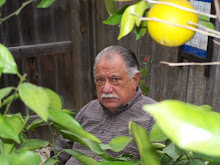
- George Bain
- M.S in Microbiology, Wichita State University 1959. Worked for Pet Milk and H.J.Heinz (Mexico), and since 1973 retired consultant for food and feed industries.